Our team's expertise spans the natural sciences & technology spectrum.
Our mission requires that we build a new type of company, sitting at the intersection of computer science and biotechnology. Our training and approaches vary, but we are uniform in our commitment to creating more healthy years for every human.

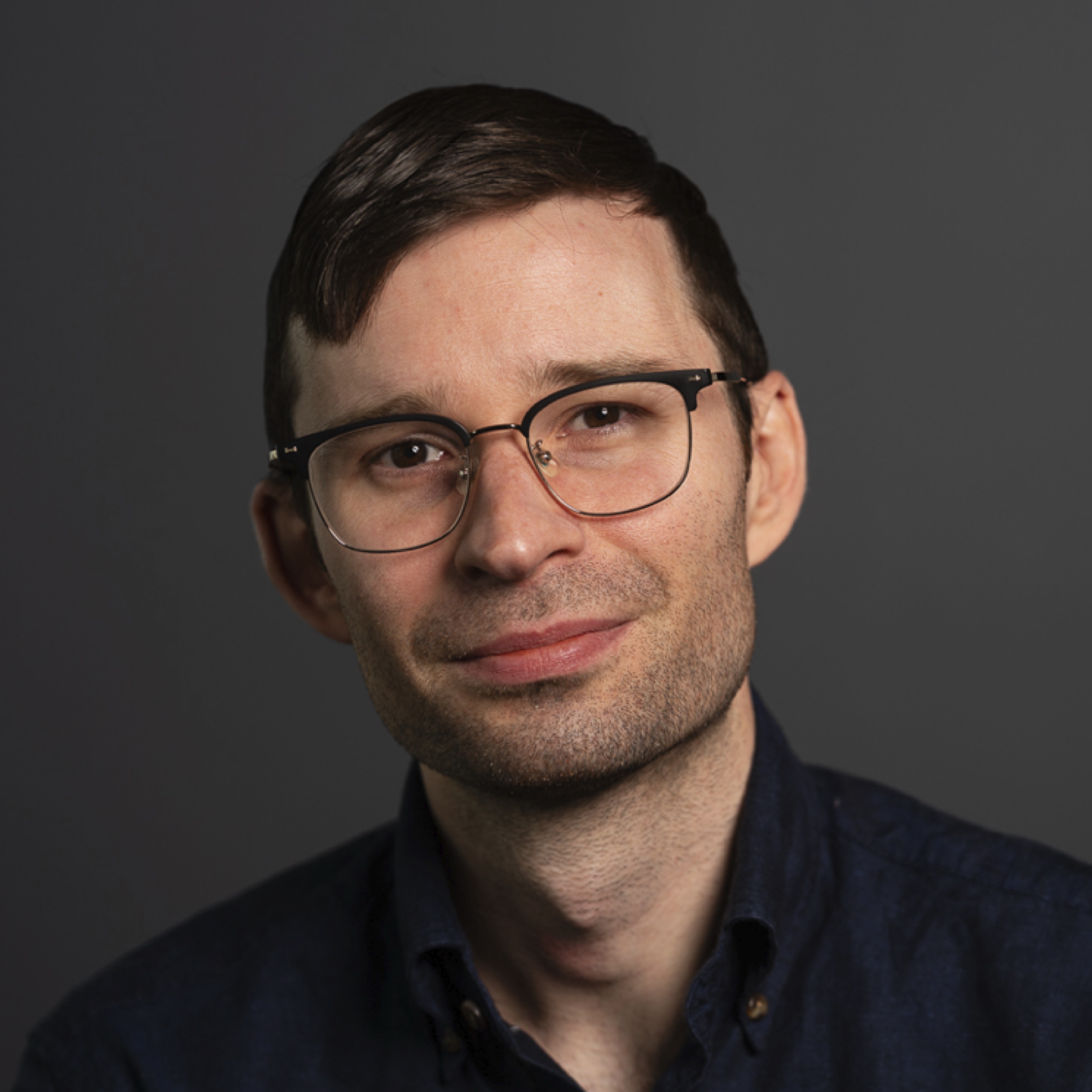
Jacob co-founded NewLimit in 2022 and has since served as the Head of Research, President, and CEO.
Jacob's scientific background sits at the intersection of molecular biology and computer science. Prior to NewLimit, he led a research laboratory focused on epigenetic reprogramming as a Principal Investigator at Calico. His program developed methods to engineer cell identity and reprogram cell age.
Jacob received a Ph.D. in stem cell biology from the University of California San Francisco.

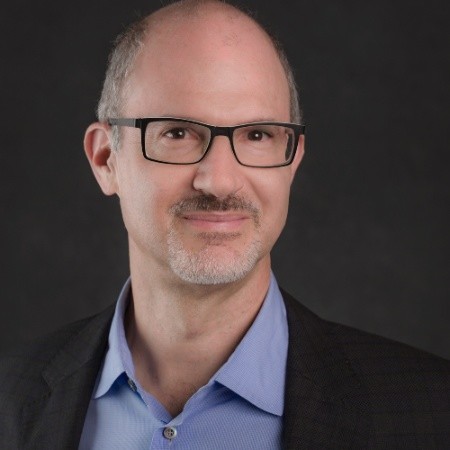
Brian co-founded NewLimit in 2022 and serves on the Board of Directors.
Brian is also the co-founder and CEO of Coinbase (NASDAQ: COIN), having grown it from inception to public company with thousands of employees and billions of dollars in revenue. He is deeply passionate about accelerating science and improving human healthspan. He brings experience in software, machine learning, organization design, fundraising, leadership, and team building.
He holds a master’s degree in computer science and a bachelor’s degree in economics from Rice University.

Blake is a scientist and startup investor. Blake has backed over 10 early stage companies that have gone public. His current investments include OpenAI, Anthropic, xAI, Neuralink, Chai Discovery, Bot Co, OpenEvidence, and Harmonic. Previously, Blake was a General Partner at GV where he was the first investor in companies ranging from personal finance with Robinhood, to quantum computers with IonQ, to cancer drugs with Arcus. All of which have gone public.
Blake holds a PhD in Bioengineering from Stanford and a BS in biomedical engineering and BS in economics from Duke University. Blake’s scientific research covered stem cell biology and early versions of bio-hybrid brain machine interfaces.
Melissa leads NewLimit's therapeutic programs from validation through the clinic, overseeing preclinical development, regulatory filings, and the advancement of reprogramming medicines into patients.
Prior to NewLimit, Melissa was Vice President of Early-Stage Product Development at 4D Molecular Therapeutics, where she led cross-functional program teams from pre-IND through clinical proof-of-concept across ophthalmology and pulmonary indications. Earlier, she led preclinical development and IND-enabling studies for small molecule programs at Verseson Corporation, advancing preclinical candidates across multiple therapeutic areas.
Melissa received her Ph.D. in Pharmaceutical Sciences & Pharmacogenomics from the University of California, San Francisco, and completed postdoctoral training at Stanford University School of Medicine.

Ron leads Predict, NewLimit's computational biology and predictive modeling group, bringing deep expertise in statistical genomics, machine learning, and therapeutic development to advance epigenetic reprogramming. He's passionate about building scalable methods to integrate complex biological data and improve decision-making across the R&D pipeline.
Ron brings over 15 years of experience at the intersection of data science and medicine. Prior to NewLimit, he was SVP and Head of AI at Shape Therapeutics, where he applied generative AI to RNA therapeutics and delivery platforms. Previously, he led Cell Therapy Informatics & Predictive Sciences at Juno, Celgene, and BMS, driving efforts in manufacturing, biomarker development and clinical strategy for programs including Breyanzi and Abecma. His work has focused on translating high-dimensional data into models that improve the design and optimization of gene and cell therapies.
Ron earned a PhD in Genetics from the University of Chicago and completed a Damon Runyon postdoctoral fellowship at the University of Washington with Jay Shendure. He holds a BA in Biology and Japanese from Carleton College.

Alex oversees NewLimit's People and Talent functions, recruiting and developing top talent in the company.
Prior to NewLimit Alex was the Head of Talent at Dave Inc where he built the recruiting function from the ground up. In prior roles at Uber, he led talent teams across the company's new business lines.
Alex is a former CPA and received his BA in Business Economics and Accounting from UC Santa Barbara.

Alex Marson is a professor at UCSF, scientific director of human health at the Innovative Genomics Institute (IGI), and head of the Gladstone-UCSF Institute of Genomic Immunology. Dr. Marson’s research goal is to understand the genetic circuits that control human immune cell function, and his team has pioneered new CRISPR gene editing technologies that offer more precise ways to rewrite DNA programs in human immune cells.
Dr. Marson received an AB and an MD from Harvard, a PhD from MIT, and completed his internal medicine residency at Brigham and Women’s Hospital, and an infectious diseases fellowship at UCSF.

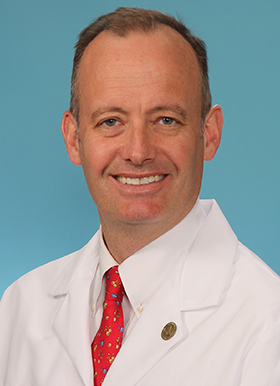
Dr. Benjamin Humphreys received his AB from Harvard college and his M.D. and Ph.D. degrees from Case Western Reserve University as part of the Medical Scientist Training Program. He trained in internal medicine at Massachusetts General Hospital and in nephrology at Brigham and Women’s Hospital and Massachusetts General Hospital. He was a member of the faculty at Harvard Medical School from 2005 – 2015, rising to the rank of Associate Professor.
In 2015, Dr. Humphreys moved to Washington University in St. Louis, where he is Chief of the Division of Nephrology and is the Joseph Friedman Professor of Renal Diseases. Dr. Humphreys was also the cofounder of Chinook Therapeutics, acquired by Novartis in 2023.

Dr. E. John Wherry is the Barbara Schiffrin President’s Distinguished Professor at the Perelman School of Medicine at the University of Pennsylvania. John also serves as the Chair of the Department of Systems Pharmacology and Translational Therapeutics and the Director of the Institute for Immunology at the Perelman School of Medicine.
John’s work has pioneered the field of T cell exhaustion and revealed the molecular mechanisms of diverse T cell identity programs. Among other contributions, his group has defined the transcriptional program of T cell exhaustion, revealed the functional characteristics of exhausted T cells, and discovered the role of inhibitory receptors such as PD-1 in the exhaustion program. The Wherry lab has demonstrated that exhaustion programs play an important role in limiting the effectiveness of adaptive immune responses to both chronic infection and cancer and explored checkpoint blockade mechanisms to re-invigorate exhausted cells. To enable these discoveries, the Wherry lab has employed emerging epigenetic profiling technologies to define T cell identity programs, identify the molecular drivers of these transcriptional programs, and delineate distinct T cell fates.
Dr. Wherry holds a Ph.D. in Immunology from the Thomas Jefferson University and a B.S. from the Pennsylvania State University.

Hao is a Professor at the University of Texas Southwestern where he holds the The Nancy B. and Jake L. Hamon Distinguished Chair in Therapeutic Oncology Research. In addition to running a prolific research laboratory, Hao cares for hepatocellular carcinoma patients at Parkland Memorial Hospital.
Using the liver as a model system, the Zhu laboratory is trying to elucidate how injury, regeneration, and wound healing influence organ function and cancer formation. They believe that understanding somatic mosaicism will be a key genetic strategy to deconvolute the complexity of wound healing and are using human genomic approaches, in vivo genetic screening, and lineage tracing to understand the functional implications of somatic mosaicism in chronic liver disease and liver cancer.
Hao holds a B.S. in biology from Duke University and an M.D. from Harvard Medical School and MIT. He underwent clinical training in internal medicine at the University of California, San Francisco, and medical oncology at the Dana-Farber Cancer Institute. Dr. Zhu completed postdoctoral research in George Q. Daley’s laboratory at Boston Children’s Hospital.

Mark M. Davis is the Director of the Stanford Institute for Immunology, Transplantation and Infection, a professor of microbiology and immunology, and a Howard Hughes Medical Institute Investigator.
Dr. Davis is well known for identifying many of the T-cell receptor genes, which are responsible for the ability of these cells to recognize a diverse repertoire of antigens. His current research focuses on obtaining a “systems level” understanding of the human immune system, including the steady state and vaccine responses of old and young subjects.
Dr. Davis received a BA from Johns Hopkins University, and a PhD from the California Institute of Technology.

Dr. Grompe is a Professor at Oregon Health and Sciences University, the director of the Oregon Stem Cell Center, and the holder of the Ray Hickey Chair and the Director of the Papé Family Pediatric Research Institute. The Grompe lab is focused on developing cell and gene therapies for genetic disorders, especially metabolic disorders of the liver. Among other accomplishments, the Grompe lab developed the first mouse models that allow for competitive repopulation of hepatocytes and further developed the first humanized liver models.
Dr. Grompe has also served as the co-founder and Chief Scientific Officer of Ambys Medicines and the founder of Yecuris.
Dr. Grompe received his M.D. in 1982 at the University of Ulm Medical School in Germany. He completed training at OHSU and Baylor College of Medicine focused on gene therapy for inherited diseases, particularly liver diseases.

Dr. Breyer received his MD from Harvard in 1979. Following residency and nephrology training he served as Professor of Medicine in the division of Nephrology at Vanderbilt University Medical School from 1985-2007, where his work focused on causes of diabetic kidney disease and hypertension focusing on transgenic mouse models.
Matt moved to Eli Lilly in 2007 to oversee a program to develop bio-therapeutics for diabetic kidney disease. In 2009 he was appointed to the position of CSO, Biotherapeutic Discovery at Eli Lilly where he oversaw preclinical target identification and validation of biologics for chronic kidney, metabolic, neurologic, and oncologic diseases. In April 2018, Dr. Breyer joined the Janssen Cardiovascular and Metabolism group in Boston where he guides discovery and development of new drugs for kidney disease.